How to Advertise for Small Business Online (2026 Guide)
Running a small business in Australia means competing in a market where customers research, compare, and decide online. I see this every day: whether someone needs a café nearby, a local tradie, or a boutique service, their journey often starts with a search or a scroll. Studies consistently show that most consumers discover brands through digital channels. Without online visibility, even great businesses struggle to stay in the conversation. The good news? There’s a wide spectrum of online advertising options from lean, low-budget experiments to scalable paid campaigns, and small businesses can absolutely win with the right approach.
Why Online Advertising Works for Small Businesses
1. You reach customers at the moment of intent
When someone searches accountant in Sydney or a hair salon near me, they’re not casually browsing. They’re actively looking to take action.
Online ads let your business appear exactly at the decision-ready moment.
2. Small budgets can generate valuable insights
One of the biggest misconceptions is that advertising requires a large spend to be effective.
In reality, modest campaigns can quickly reveal:
- Which messages resonate
- Which offers convert
- Which audiences respond
- Which channels deliver ROI
Advertising becomes a learning system, not just a sales tool.
3. Flexibility, traditional media can’t match
Need to push a seasonal promotion? Fill quieter weeks? Pause during peak demand?
Digital campaigns can be turned on, adjusted, or paused at any time.
4. Retargeting dramatically improves efficiency
Most visitors won’t convert on their first interaction. Retargeting reconnects you with people who already know your brand, typically at a lower cost and higher conversion rate.
5. Tracking connects spend to outcomes
Clicks, calls, bookings, enquiries, and purchases online advertising provides measurable performance data rather than guesswork.
Understanding Your Target Audience
If advertising is the engine, audience understanding is the fuel. I’ve learned that campaigns fail less often because of platform choice and more often because of vague targeting.
Identify your ideal customer profile
I start by defining who I actually want to attract. Age, location, lifestyle, income bracket, but also behaviours and frustrations. What problem are they trying to solve? What triggers urgency? A generic everyone is my customer mindset usually leads to wasted spend.
Research where your audience spends time online
Different audiences live on different platforms. Younger demographics might lean heavily toward Instagram or TikTok. Professionals may spend more time on Google Search or LinkedIn. Community-driven niches often gather in Facebook Groups or forums. My job is to meet them where attention already exists.
Understand the buying journey
Not everyone is ready to buy immediately. Some are just becoming aware of a need. Others are comparing options. A smaller segment is actively choosing a provider. Aligning ads with awareness, consideration, and decision stages makes messaging feel relevant rather than intrusive.
Low-Budget Online Advertising Ideas
A limited budget doesn’t block growth; it forces smarter choices.
Small businesses rarely fail because they spend too little. They struggle because they spend without a clear testing mindset. When every dollar matters, advertising becomes less about scale and more about precision, learning, and efficiency.
Below are approaches that consistently work well for small-business budgets.
Boosted Posts: Start With What Already Works
Boosting posts is often dismissed as basic, yet it remains one of the safest entry points for businesses new to paid advertising.
Instead of creating ads from scratch, you amplify content that has already proven its appeal. Engagement, such as likes, comments, shares, and saves, acts as an early signal that the message resonates.
This reduces creative guesswork.
Boosted posts are particularly effective for:
- Promotions
- Events
- Limited-time offers
- Announcements
- High-performing organic content
However, blindly following can quickly exhaust the budget.
Common pitfalls include promoting posts that received little organic traction or targeting audiences that are far too broad. A boosted post works best when it feels like a natural extension of content people already care about.
Meta Lead Ads: Removing Friction From Enquiries
Lead ads on Facebook and Instagram simplify the conversion process. Instead of sending users to an external landing page, prospects submit their details directly within the platform.
For small businesses, this friction reduction can be significant.
Lead ads tend to perform strongly for:
- Service enquiries
- Quote requests
- Consultations
- Bookings
- Callback requests
The key lies in restraint.
Every additional form field lowers completion rates. Businesses often sabotage performance by asking for excessive information. Short, focused forms consistently outperform longer ones.
Think: essential details only.
Google Search Ads: Capturing Demand Already in Motion
Search advertising targets users who are actively looking for solutions. This makes it one of the highest-intent advertising channels available.
When someone searches:
- Emergency plumber Brisbane
- Wedding photographer Melbourne
- Tax accountant Perth
The intent is clear. They are not browsing; they are deciding.
For small-budget campaigns, discipline is critical.
Rather than targeting dozens of keywords, successful small businesses focus on:
- Commercial-intent phrases
- High-value services
- Localised searches
- Carefully managed negative keywords
Poor keyword selection is one of the fastest ways to burn through advertising spend with little return.
Google Map / Local Ads: Winning the Nearby Decision
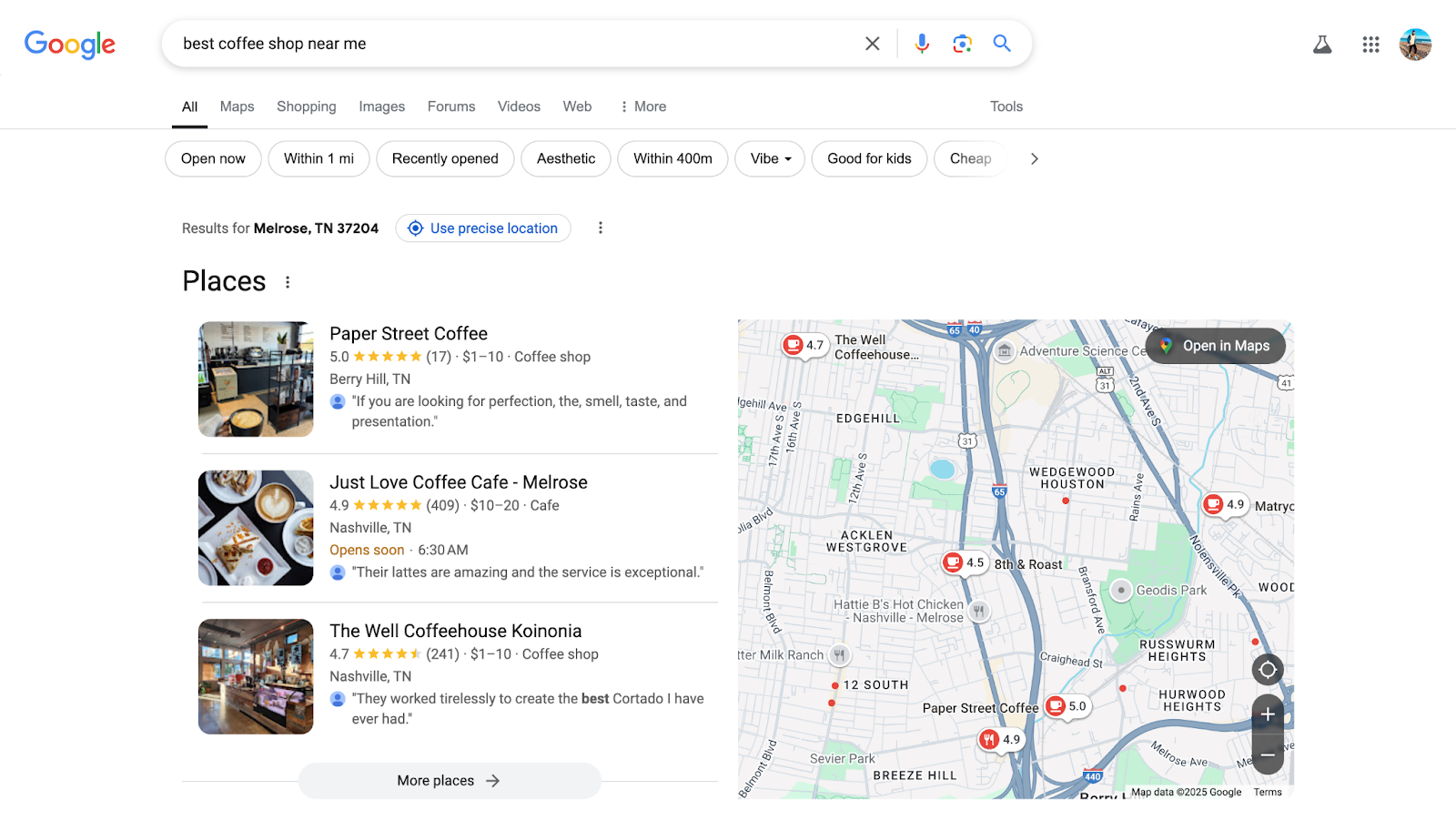
For businesses dependent on physical location or service areas, map visibility can outperform traditional display campaigns. Why?
Because users searching via Maps are often close to taking action.
These ads work particularly well for:
- Cafés
- Restaurants
- Clinics
- Salons
- Retail stores
- Local service providers
In many cases, appearing at the top of map results influences decisions more directly than broader awareness campaigns.
Retargeting Ads: The Efficiency Multiplier
If budget efficiency is the goal, retargeting frequently delivers the strongest ROI.
These campaigns reconnect with people who have already:
- Visited your website
- Viewed products
- Engaged with social content
- Clicked previous ads
Because the audience is already familiar with your brand, conversion probability increases while cost per result often decreases.
For small businesses, retargeting isn’t just an option; it’s often the smartest first scaling tactic.
Offer-Driven Ads: Creating a Clear Reason to Act
Advertising without a compelling offer can feel like noise.
Strong offers introduce urgency and reduce hesitation. They give potential customers a concrete reason to choose your business now rather than later.
Examples include:
- Introductory discounts
- Free consultations
- Bundled packages
- Bonus services
- Limited-time promotions
The caution here is strategic sustainability.
Offers must protect margins. Discounts designed purely to attract attention can undermine profitability and long-term positioning.
Collaboration & Micro-Influencer Campaigns
Partnership-driven advertising can stretch budgets further than many businesses expect.
Collaborating with local creators or complementary brands allows small businesses to access audiences that already trust the messenger.
Benefits often include:
- Built-in credibility
- Lower acquisition costs
- More authentic engagement
- Niche audience targeting
Micro-influencers, in particular, frequently outperform larger personalities when audience relevance is strong.
Paid Online Advertising Channels for Small Business
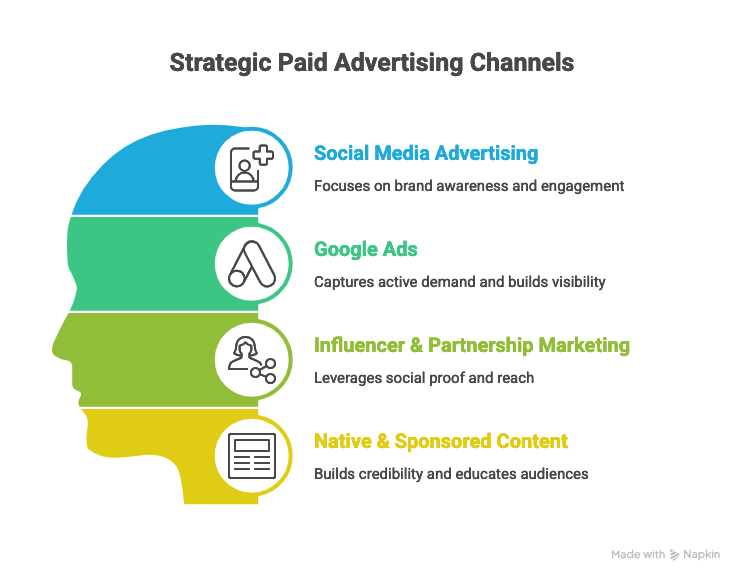
As businesses move beyond experimentation and into structured scaling, channel selection becomes more strategic.
Social Media Advertising
Social platforms excel at building:
- Brand awareness
- Engagement
- Community familiarity
- Visual storytelling
Performance depends heavily on creative strength. Weak visuals or generic messaging rarely survive in competitive feeds.
Google Ads (Search & Display)
Google Ads supports both:
- Active demand capture (Search)
- Brand visibility & remarketing (Display)
For many small businesses, search campaigns remain the primary revenue driver.
Influencer & Partnership Marketing
When aligned carefully with brand positioning, partnerships blend reach with social proof — a combination particularly valuable for trust-sensitive industries.
Native & Sponsored Content
Useful for credibility-building and education-driven strategies.
Native placements help businesses educate audiences while building authority and credibility rather than pushing direct sales alone.
Making Online Advertising Work for Your Small Business
Understanding ROI: Will online advertising be profitable?
1. What ROI should I expect?
There’s no universal number. Industry, margins, competition, and execution all matter. Early campaigns often prioritise data collection over profit maximisation.
2. Calculating break-even
I calculate how many conversions I need to cover ad spend. This transforms advertising from a gamble into a financial model.
3. Why advertising is still worth it
Beyond immediate sales, ads build brand familiarity, remarketing pools, and long-term customer pipelines.
Common challenges small businesses face
Limited budgets
Every dollar must justify itself. Waste compounds quickly.
Lack of expertise
Platforms evolve constantly. Misconfiguration is common.
Competition from larger brands
Big players can outspend, but not always out-target.
Measuring true impact
Vanity metrics distract from enquiries and revenue.
How Ptech helps Australian small businesses succeed
Working with Ptech means campaigns are built around strategy, not guesswork.
- Strategic planning & setup
- Ongoing optimisation
- ROI-focused execution
- Transparent reporting
Rather than chasing impressions alone, the focus stays on outcomes: leads, bookings, revenue. Get a free online advertising audit from Ptech. Discover where your budget can work harder. Contact Ptech
Conclusion
Online advertising gives Australian small businesses something powerful: control. I can start lean, test quickly, pause when needed, and scale what performs. Whether using boosted posts, search ads, retargeting, or collaborations, success rarely comes from one perfect campaign. It comes from consistency, refinement, and deep audience understanding. Start small. Learn fast. Build momentum.
FAQs
- What is the cheapest way to advertise a small business online? The most affordable starting points are organic channels: social content, local SEO, and email nurturing. Consistent posting, optimised Google Business Profile, and basic SEO foundations often deliver strong visibility before paid ads are introduced.
- How much should a small business spend on online advertising? Budgets vary, but many Australian small businesses begin with a test range rather than a fixed commitment. A modest monthly spend allows structured experimentation across platforms, measuring cost per lead or sale before scaling.
- Which online advertising platform is best for a small business? It depends on goals. Google Search captures high-intent demand. Social ads build awareness and engagement. Retargeting improves efficiency. The strongest strategy often combines channels rather than relying on just one.