Is SEO Worth It for Small Businesses? Cost vs ROI Explained
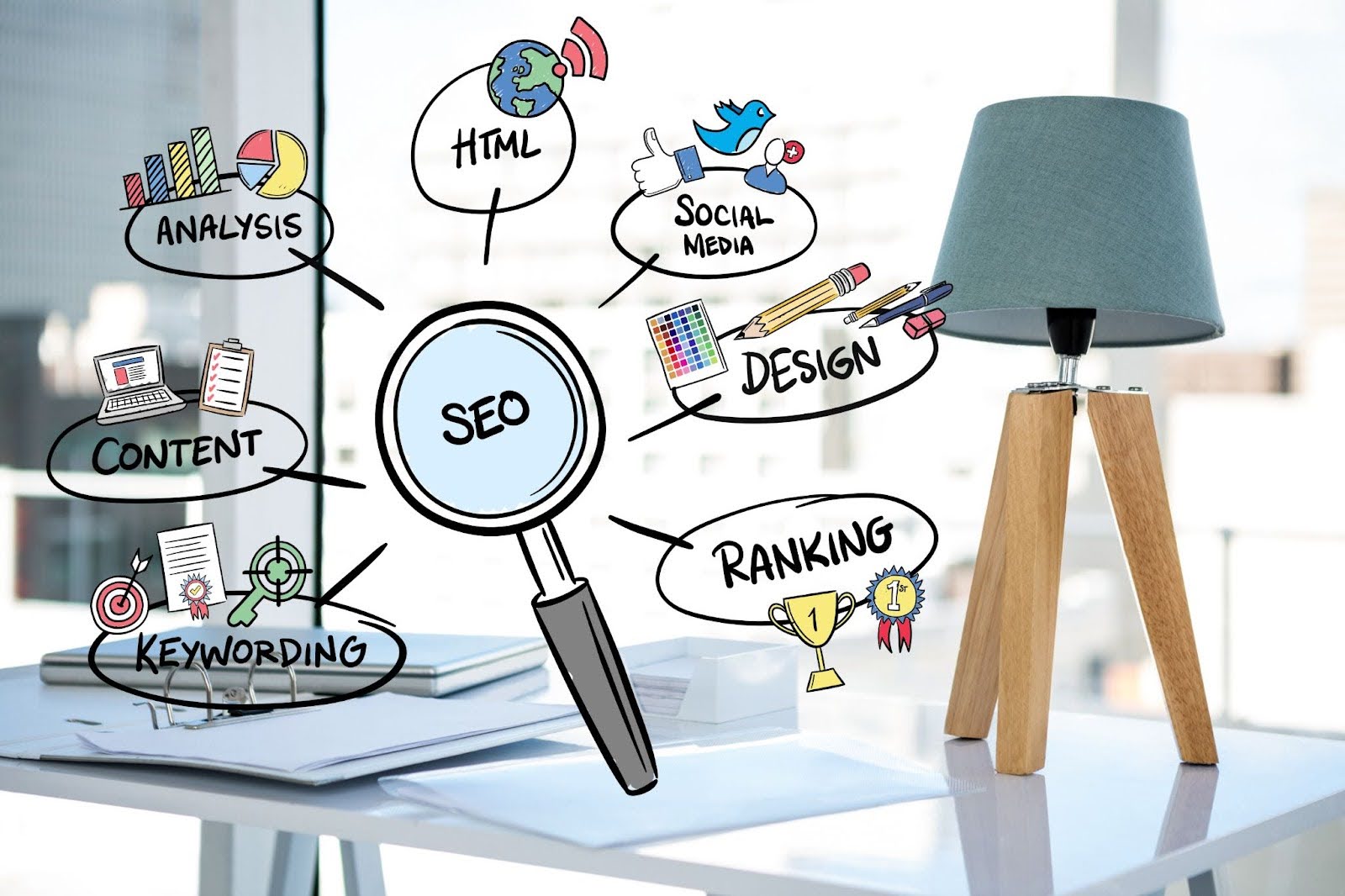
For many small businesses, SEO sits in that uncomfortable zone between “we know we need it” and “why does it cost this much?” The results don’t show up overnight, the work isn’t always visible, and comparing it with paid ads makes it feel slow.
But the way I see it, SEO was never built for quick bursts. It’s built to create a steady flow of people who are already looking for what the business offers. In this guide, I want to break down how I think small businesses should look at SEO costs, how returns actually form, and when SEO becomes a smart financial move instead of just another marketing expense. marketing expense.
Why SEO Often Feels Expensive to Small Businesses
1. Results are not instant
SEO doesn’t reward impatience. Unlike ads that can switch on leads in a day, search visibility grows gradually. Rankings build, trust builds, and authority builds. From a business owner’s perspective, especially when looking at monthly invoices, that slower curve can feel uncomfortable, even if the long-term outcome is stronger.
2. SEO work is less visible than ads
Ad campaigns look active. New creatives, dashboards, clicks. SEO work is quieter. Fixing site structure, refining pages, and improving relevance happen behind the scenes. Because it’s not always seen, its impact can be underestimated, even though it shapes how customers discover the business.
3. Comparison with short-term tactics
I see many small businesses judge SEO using the same lens as short-term promotions. But ads stop when budgets stop. SEO doesn’t work like that. It competes on durability, not speed. The frustration usually comes from comparing two tools built for very different timeframes.
What Small Businesses Typically Invest in SEO
I don’t see SEO as a one-off purchase. It’s closer to building infrastructure. Each improvement adds to the foundation: stronger pages, clearer structure, better visibility for the right searches.
Investment varies by industry, competition, and geography. A local service provider faces a different landscape from an e-commerce brand targeting national demand. What matters is perspective. SEO spending is not justan operational cost. Over time, it turns into owned digital presence pages that keep bringing in potential customers without having to pay for every click.
When it’s done properly, SEO moves from being a monthly fee to becoming a long-term acquisition channel that grows more efficient as it matures.
How SEO Generates ROI Over Time
1. Traffic growth compounds
SEO isn’t linear. Improvements stack. One ranking page becomes three, then ten. As visibility spreads across more search terms, traffic doesn’t just increase; it layers. This compounding effect is where the real leverage comes from.
2. Conversions turn traffic into revenue
Traffic alone means little. What changes ROI is intent. SEO brings people who are already searching for a solution. When they land on the right page, even small improvements in conversion rate or average order value can make a big difference. As traffic grows, these gains multiply.
3. SEO builds assets, not just campaigns
Paid ads reset every month. SEO work continues working. A page ranking today can still drive enquiries long after the initial work. Over time, SEO becomes part of the business’s digital infrastructure, something that keeps contributing rather than needing to be constantly repurchased.
SEO vs Paid Advertising for Small Businesses
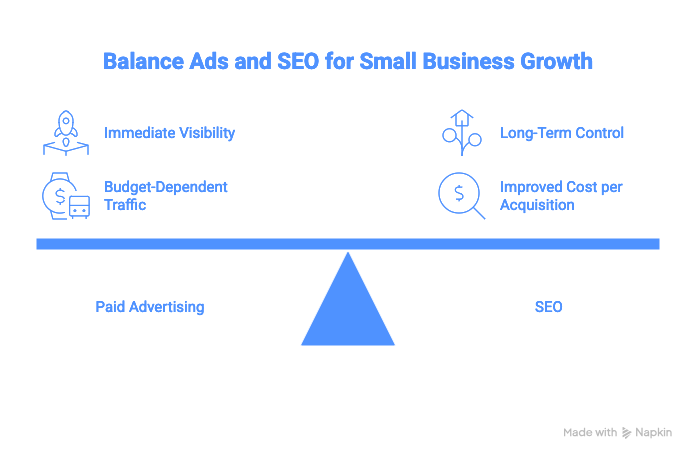
SEO and ads are not rivals. They play different roles.
Paid ads are about speed. They’re great for testing offers, generating short-term demand, and creating immediate visibility. But they depend completely on budget. Turn off spending, and traffic disappears.
SEO moves more slowly but builds stability. As rankings strengthen, traffic becomes less tied to daily budgets. Cost per acquisition often improves because visibility doesn’t reset each month.
For small businesses, the real advantage comes from balance. Ads create momentum. SEO builds ground underneath. Relying only on ads can feel like running on a treadmill. SEO gives you something solid to stand on.
What Affordable SEO Should Really Mean
Affordable in SEO shouldn’t mean the cheapest option.
It should mean the right level of investment for the outcomes being built.
I’ve seen low-cost SEO packages that look appealing upfront. But behind the scenes, they often rely on generic content, surface-level optimisation, and very little real strategy. A business feels like SEO is happening, yet rankings stay unstable, traffic lacks intent, and conversions barely move. Fixing weak foundations later often costs more than doing it properly from the start.
SEO becomes truly affordable when effort is focused on the right places. Not spreading work thin. Not chasing keywords for the sake of reports. Instead, it’s about identifying meaningful opportunities, strengthening the pages that matter, and improving the parts of the site that influence revenue.
For me, affordability is less about volume and more about clarity. Knowing why actions are taken, what problem they solve, and how results will be measured. When that transparency exists, SEO stops feeling vague and starts functioning as a controlled investment.
When SEO Is Worth It for a Small Business
SEO delivers the strongest return when there is already clear demand in the market. If potential customers are actively searching for related products or services, SEO helps the business appear at the moment that intent exists.
However, demand alone isn’t enough. The business also needs a clear offer. When visitors land on the site, they should quickly understand what the business does, who it is for, and why it stands out. If messaging is unclear, traffic may increase, but results will not follow.
SEO is most suitable for businesses entering a growth stage, those looking to expand their customer base steadily, build long-term visibility, and reduce total dependence on paid advertising.
On the other hand, if the business model is still evolving, services are not yet defined, or operations are not ready to handle increased demand, SEO may not be the immediate priority. Once the foundations are stable, SEO becomes a powerful growth lever. Without that base, it can feel like an investment without direction.
How Ptech Helps Small Businesses Turn SEO Into ROI
At Ptech, we treat SEO as a growth system, not just a ranking exercise. We start from business goals, not only keywords. Optimisation connects to conversion pathways, so visibility leads to real outcomes. And performance tracking focuses on leads and enquiries, not just traffic charts.
The aim is to help small businesses see organic search as part of a structured growth engine, one designed to support revenue over time, not just generate activity.
Conclusion
SEO feels expensive when judged by short-term expectations. But its value grows over time. For small businesses focused on steady, sustainable growth, the decision isn’t only about cost. It’s about how much future opportunity depends on being visible when customers are actively searching. With realistic expectations and the right structure, SEO becomes less of an expense and more of a long-term business asset.
If your business is ready to stop treating SEO as a cost and start using it as a long-term growth asset, it may be time to talk with a team that builds search around outcomes, not just rankings. Contact us
FAQs
- How long before SEO delivers ROI? Early movement can appear in months, but strong ROI typically builds over a longer period as rankings, traffic, and conversions layer over time.
- Can small businesses compete in SEO? Yes, by focusing on specific services, local markets, or niches instead of broad competition.
- Is SEO better than ads? They serve different purposes. Ads provide speed. SEO builds long-term visibility and reduces reliance on constant ad spend.