SEO Metrics: KPIs to Track in 2026
SEO can look impressive on paper. I see it all the time. Traffic goes up. Rankings improve. Reports show steady growth curves. But when leadership asks a simple question, “What did this actually do for the business?” the answer often gets fuzzy.
This is where many SEO programs struggle. Not because the work is ineffective, but because the measurement framework doesn’t connect activity to outcomes. Without the right seo metrics, performance gets mistaken for progress.
In this article, I’ll walk through which metrics genuinely matter, how to avoid reporting traps, and how SEO reporting should link search visibility to real commercial impact.
Understanding SEO Measurement and Reporting
In my experience, most businesses don’t lack data. They lack clarity. Modern analytics tools can show traffic sources, keyword trends, engagement signals, and conversion paths. Yet the connection between those numbers and business results often remains unclear.
Data Doesn’t Equal Clarity
A dashboard might show:
- More organic sessions
- More keywords ranking
- Higher impressions
On the surface, that looks like growth. But growth in what?
If those numbers aren’t tied to commercial search intent or buyer behaviour, they don’t tell me much about market position or sales influence. I’ve seen B2B software companies grow blog traffic rapidly, while their core solution pages remain invisible for high-intent queries. Traffic rises. Pipeline doesn’t.
Another common scenario: content ranks well internationally, but the business only sells in Australia. Visibility improves, but not where it actually matters.
Common Signs of Measurement Gaps
These situations usually follow familiar patterns:
- Organic traffic increases, but leads stay flat
- Rankings improve, but revenue doesn’t move
- Reports highlight activity, not outcomes
- Technical improvements are reported, yet key pages are still underperforming
When this happens, I don’t see it as “SEO not working.” I see it as the wrong things being measured.
Why This Gap Affects Decision-Making
Poor measurement creates confusion:
- ROI becomes hard to demonstrate
- Optimisation focuses on what’s visible, not what’s valuable
- Budget decisions turn defensive instead of strategic
That’s why I often hear the question: how to know if your seo is working? The answer rarely lies in more data. It lies in choosing better metrics.
What Are Vanity Metrics in SEO
Some SEO numbers look impressive, but don’t say much about performance.
What Are Vanity Metrics?
I think of vanity metrics as exposure signals. They show reach, not results. They can make reports look strong without proving business influence.
Examples in SEO
- High rankings for low-intent or irrelevant keywords
- Traffic spikes driven by informational content with no buying signal
- Growing impressions without a corresponding rise in clicks
These signals describe visibility, but not commercial effectiveness.
Why Relying on Them Is Risky
Vanity metrics can quietly distort strategy. Teams may prioritise traffic growth over audience quality, or focus on content volume instead of intent alignment. Reporting becomes about showing movement rather than explaining performance.
Over time, this creates a disconnect between SEO and revenue, not because SEO lacks value, but because it’s being evaluated through the wrong lens.
What SEO Metrics to Track
I prefer a framework that connects search behaviour to business outcomes. Instead of asking “Are numbers going up?” I ask: “Is search helping the right people move closer to conversion?”
Performance: User Behaviour & Engagement
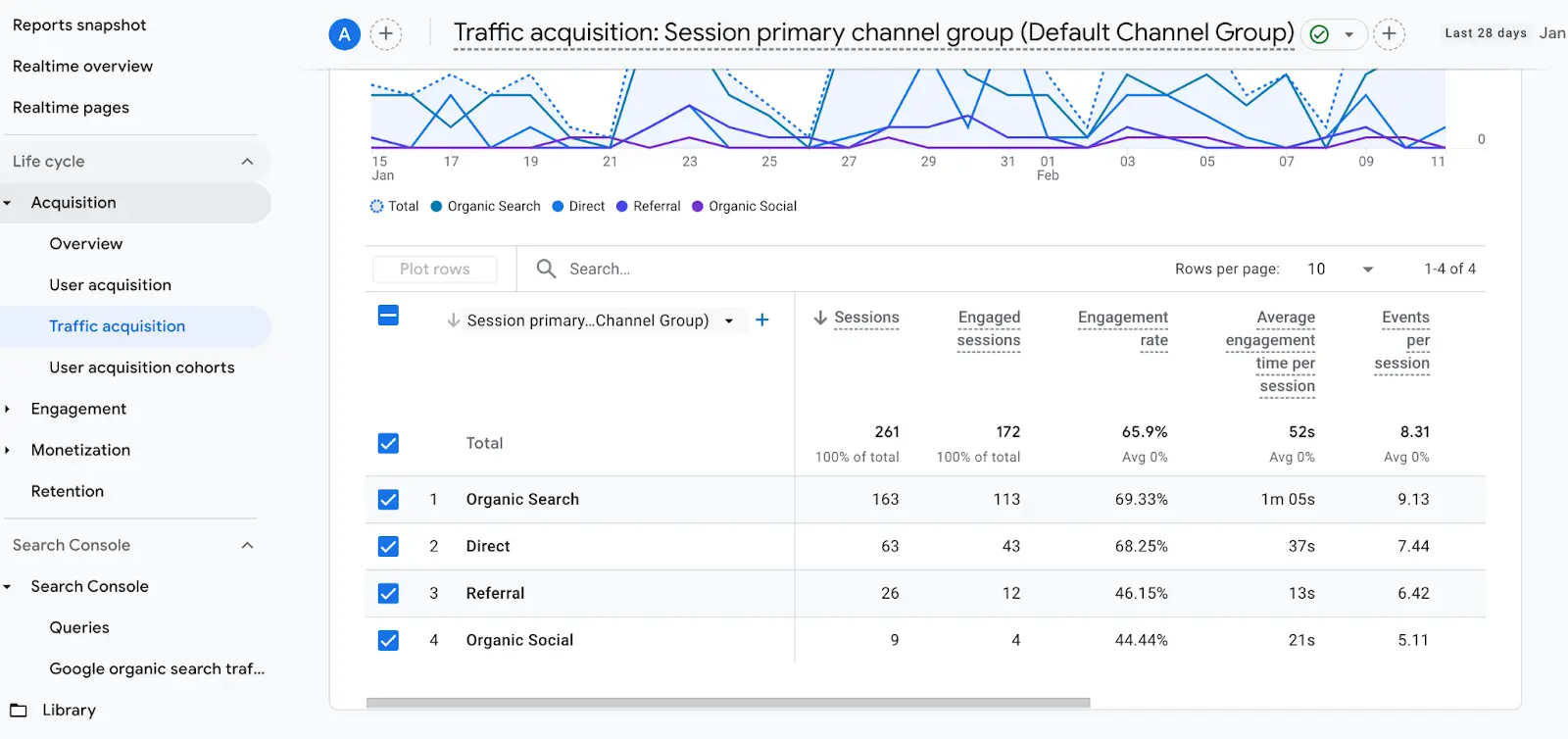
Source: Tona Designs
These metrics indicate whether the right audience is arriving and interacting.
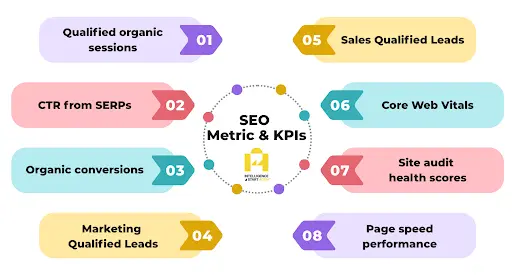
- Organic traffic / Organic Sessions → GA4 (Acquisition → Traffic acquisition report, filter by ‘Organic Search’)
- Keyword rankings → GSC, Semrush
- Engagement rate and bounce rate → GA4
- Time on page and scroll depth → GA4
- Organic CTR → GSC
For example, in SEO campaigns, a rise in CTR often signals better alignment between search intent and page messaging, sometimes more meaningful than ranking changes alone.
When this group of metrics looks weak, I usually see an intent mismatch. Search is attracting one expectation, while the page delivers something else.
Improvement typically involves:
- Rechecking keyword intent
- Adjusting the page structure so the value is clear immediately
- Refining titles and descriptions to attract the right clicks
Revenue & Pipeline: Business Impact
This layer connects SEO to outcomes that leadership actually cares about.
- Organic conversions (forms, calls, purchases)
- Marketing Qualified Leads (MQLs) from organic traffic
- Sales Qualified Leads (SQLs) influenced by SEO
- Revenue from organic channels
- Pipeline contribution from search
This layer brings together organic conversions, conversion rates, lead quality, and revenue influenced by search, often combining GA4 data with CRM insights.
If performance here is weak, steady traffic but low-quality leads or limited revenue impact, the problem usually lies on the page, not in search visibility.
Common fixes include:
- Clarifying value on service pages
- Strengthening calls to action
- Aligning content with buyer concerns
This is especially important in National SEO and Local SEO, where searches often signal commercial intent.
Technical Health
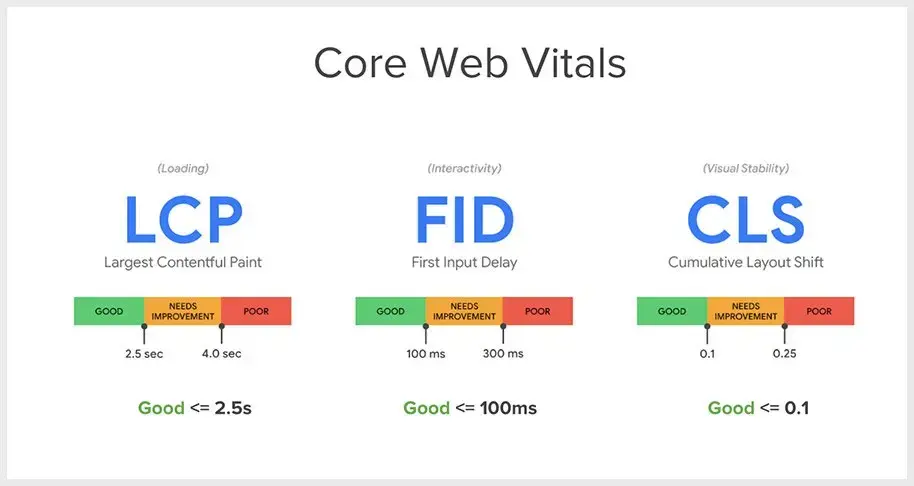
Source: Leanne Wong
Technical metrics don’t drive revenue directly, but they enable everything else.
- Core Web Vitals (LCP, INP, CLS) → GSC (Core Web Vitals report).
- Crawl and indexation health → Semrush
- Site audit health scores → Semrush
- Page speed performance → Google PageSpeed Insights
When this side is weak, strong content can still underperform. Improvements often involve speeding up pages, fixing indexation issues, and strengthening internal linking, the core of Technical SEO and critical for larger sites, such as in E-commerce SEO.
Looking at SEO through these three layers keeps my focus where it belongs: the right audience, meaningful business impact, and a technical foundation that allows performance to show.
SEO Reporting
Metrics matter. But interpretation matters more.
What Strong SEO Reporting Includes
Good seo reporting doesn’t just list numbers. It explains performance in context.
Strong reports typically include:
- Business context (goals, market focus)
- Page-level insights, not just site-wide trends
- Segmentation by intent or funnel stage
- Clear optimisation priorities for the next cycle
Reporting should answer: What changed? Why? What should be done next?
What Weak Reporting Looks Like
Weak reporting tends to include:
- Charts without explanation
- Rankings without intent context
- Traffic growth without conversion insight
- No clear action plan
That produces information, not understanding.
Data-Driven SEO with Ptech
Ptech helps businesses move beyond surface metrics and into outcome-focused measurement. Instead of default dashboard KPIs, measurement frameworks are built around commercial goals. Tracking systems connect search visibility to lead quality, pipeline influence, and revenue contribution. Reporting is structured to guide decisions, not just document activity, ensuring SEO becomes a strategic growth channel rather than a reporting exercise.
Conclusion
For me, SEO success isn’t about how busy a dashboard looks. It’s about whether search visibility helps the right audience take meaningful action. When measurement focuses on outcomes instead of activity, optimisation becomes clearer, reporting becomes more credible, and SEO earns its role in growth strategy.
FAQs About SEO Metrics
- 1. What are SEO metrics? SEO metrics are performance indicators that measure how search visibility, user behaviour, and technical performance influence traffic quality, engagement, and business outcomes.
- Which SEO metrics are most important for businesses? The most important metrics are those tied to qualified traffic, conversions, lead quality, and revenue impact, supported by engagement and technical performance indicators.
- Do SEO metrics differ depending on business goals? Yes. E-commerce brands prioritise transactions and revenue, while service businesses focus more on lead quality, pipeline contribution, and enquiry conversion.
- How can businesses improve the bottom line using SEO metrics? By tracking metrics linked to buyer intent and conversion performance, teams can prioritise optimisations that attract higher-quality visitors and improve commercial outcomes.