SEO Pricing in Australia: Package Costs & What to Expect in 2026

In 2026, SEO isn’t cheap, and honestly, it shouldn’t be. I’ve worked with Australian businesses that treated SEO as a monthly expense, and others that treated it like a long-term growth asset. The difference in results is obvious. This guide is here to cut through the noise. I’ll walk you through what SEO actually costs in Australia, why prices vary so much, how agencies structure their pricing, and how to choose an SEO package that won’t quietly waste your budget.
How Much Does SEO Cost in 2026?
1. Average SEO costs for Australian businesses
Let’s start with reality, not marketing promises.
In Australia, SEO pricing in 2026 generally looks like this:
- Small businesses: around $800–$2,000 per month
- Mid-sized businesses: roughly $2,000–$5,000 per month
- Enterprise or national brands: $6,000–$10,000+ per month
If you’re seeing prices far below this, something is missing: time, strategy, or quality. SEO today involves content, technical performance, authority building, and ongoing optimisation. That work costs money because it takes people, not tools.
2. Why SEO costs vary so much
Two businesses can both say “we want SEO” and still need completely different solutions. One might need basic visibility. Another needs to outrank national competitors. SEO pricing changes because the work changes. That’s why flat, one-size-fits-all packages rarely deliver meaningful results.
Key Factors That Determine SEO Package Prices
SEO pricing starts to make sense once you know what actually drives the cost.
1. Scope of work and services included
Some packages stop at on-page optimisation. Others cover strategy, content, links, and ongoing improvements. A full SEO strategy, the kind agencies like Ptech run, naturally costs more because it addresses the whole problem, not just part of it.
2. Industry competitiveness
Ranking in low-competition niches is one thing. Competing in legal, finance, e-commerce, or healthcare is another. The tougher the space, the more authority and consistency SEO requires.
3. Current website condition
A technically sound website is cheaper to optimise. A site with crawl issues, poor structure, or thin content needs groundwork before anything else. This is where Technical SEO becomes unavoidable, and yes, it affects pricing.
4. Business size and goals
Local lead generation and national growth are different games. A plumber targeting one suburb doesn’t need the same investment as a brand targeting multiple states.
5. Geographic targeting
Targeting one city is manageable. Targeting Australia-wide requires more content, links, and authority. Local SEO and national SEO sit at very different price points.
6. Agency experience and reputation
Experienced agencies charge more because they’ve already made and fixed the mistakes. Cheap SEO often ends up being the most expensive option long-term.
7. Timeframe and urgency
If you want results fast, expect a higher upfront investment. SEO can’t be rushed without additional resources.
SEO Pricing Models in Australia
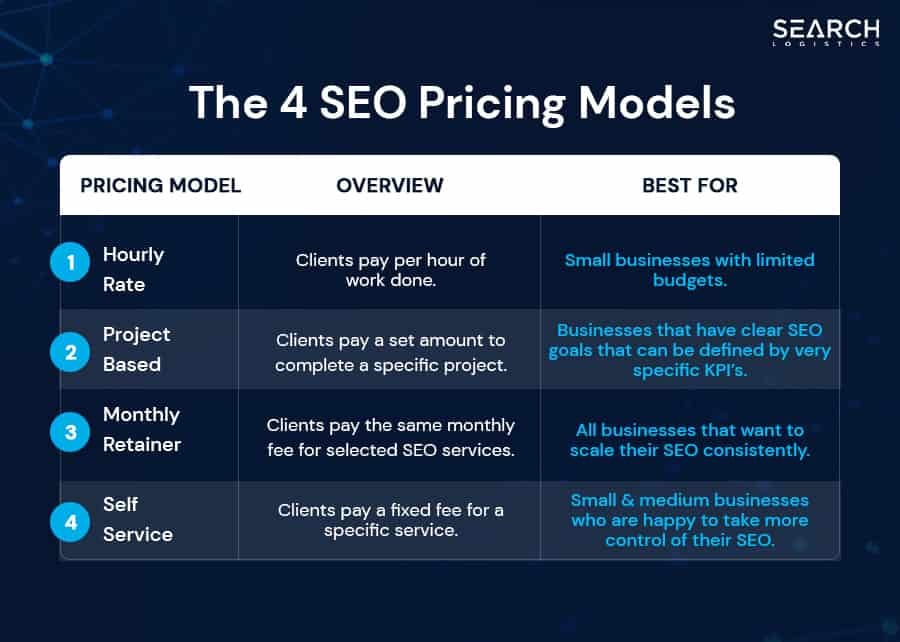
Here’s how pricing is usually structured and how it actually works in practice.
1. Monthly retainer-based SEO pricing
This is the most common model, and for good reason. SEO compounds over time. Monthly retainers support ongoing optimisation, content, and authority growth.
2. Hourly SEO rates
Hourly rates (often $120-$250/hour) can work for audits or advisory work, but they’re rarely effective for long-term growth.
3. Project-based SEO pricing
Best suited for defined tasks like site migrations or one-off audits. Not ideal if rankings and traffic growth are the goal.
4. Performance-based SEO pricing
This sounds appealing, but it’s risky. Rankings don’t always translate to revenue, and this model often encourages shortcuts.
5. Custom pricing models
Serious agencies now price around outcomes and scope, not templates. This usually leads to better alignment and better results.
What’s Included in Different SEO Package Tiers
1. Basic / Starter SEO packages
These packages suit small businesses getting started.
They typically include:
- Keyword research
- On-page optimisation
- Core SEO setup
- Local citations
They’re useful for visibility but limited in competitive spaces.
2. Standard / Growth SEO packages
This is where SEO starts to move the needle.
Expect:
- Strategic Content Creation
- Link building
- Ongoing technical improvements
- Conversion-focused optimisation
Most growing Australian businesses sit comfortably in this tier.
3. Premium / Enterprise SEO packages
Enterprise SEO is resource-heavy by design.
It usually includes:
- Advanced technical work
- Multi-location or E-commerce SEO
- Dedicated strategists
- AI SEO / AIO optimisation for AI Overviews and answer engines
- Priority support and reporting
This level is about scale and defensibility.
Why Investing in SEO Is Worth It
1. Long-term ROI and sustainable growth
I don’t see SEO as a monthly cost. I see it as something you build and then benefit from over time. A well-ranked service page or a strong content cluster can keep generating leads long after the work is done.
In Australia, I’ve seen businesses hit the 12–18 month mark and realise their cost per lead is far lower than before. Not because they’re doing less, but because the foundation is finally strong. SEO takes time, but once it works, it works consistently.
2. Cost-effectiveness compared to paid advertising
Paid ads are simple: stop paying, traffic stops. That’s fine for short-term wins, but it’s risky to rely on long-term.
SEO works differently. Once rankings are in place, every extra click doesn’t cost you more. With ad costs rising across Australia, many businesses use SEO to stabilise lead flow, then layer ads on top to scale, not the other way around.
3. Building brand authority and trust
People still trust organic results more than ads, especially for high-consideration services. When your brand shows up repeatedly in search results across guides, service pages, and FAQs, trust builds naturally.
Good SEO doesn’t just make you visible. It makes you feel established. And that often shortens the sales process more than any clever ad copy.
4. Competitive advantage in your market
SEO is hard to copy quickly. A competitor can replicate your ads in days, but outranking a strong website with solid content and authority takes real time and investment.
That’s why SEO, done properly, becomes a long-term defensive advantage, not just a traffic channel.
What to Look for When Choosing an SEO Agency
1. Real experience, not just good slides
I always tell businesses to look past the pitch deck. Case studies should explain what was done and why, not just show charts going up. Experience in your industry helps, but honesty about what worked and what didn’t matter more.
2. Clear pricing and clear deliverables
You should know exactly what you’re paying for each month. SEO shouldn’t feel like a black box. A good agency explains what they’re doing, what they’re prioritising, and how that connects to your business goals.
3. Strategy over templates
If every client gets the same SEO package, the results will be average. Effective SEO adapts as the business grows, competition changes, and data comes in. Flexibility is more important than a long checklist of services.
4. Reporting and communication that make sense
Reports don’t need to be complicated. You should be able to see what’s improving, what isn’t, and what’s being adjusted. Just as important: can you actually talk to the people working on your account?
5. Red flags to watch for
Guaranteed rankings, unrealistically low prices, or promises of instant results are warning signs. SEO doesn’t work like that, and agencies that say it does usually cut corners.
6. Realistic timelines
For most Australian businesses, early movement shows up around 3-6 months. Meaningful growth usually takes 6-12 months. Any agency worth trusting will tell you that upfront.
Partner with Ptech: Your SEO Growth Partner in Australia
At Ptech, we don’t treat SEO as a fixed package. We treat it as a long-term growth system. Every decision is tied back to one question: Is this helping the business grow, or just looking good in a report?
We’ve worked with Australian businesses across multiple industries, and the focus is always the same: sustainable traffic, real leads, and ROI over time.
If you’re looking for SEO that’s built for results, not shortcuts, we’re ready to talk.
FAQs
- What is a reasonable SEO budget in Australia? Most businesses should expect $1,500–$3,000 per month for meaningful results. Competitive industries cost more.
- How long does SEO take to work? Early signals appear within 3-6 months. Strong results take 6-12 months.
- Are cheap SEO packages worth it? Usually no. Quality SEO requires strategy, content, and expertise, not shortcuts.