SEO vs SEM: Which is Better for Your Business Strategy?
Search engines are a powerful marketing source to attract attention and reach potential customers. Most businesses are aware that search engines can drive massive traffic to their website, then increase sales and leads. However, search engines can be a challenging marketing strategy because Search Engine Optimisation (SEO) and Search Engine Marketing (SEM) would be a confusing concept for those who are not familiar with digital marketing.

In some circumstances, SEM and SEO can be used interchangeably because of their similar set of activities. Although it might be difficult for people who are not in the marketing industry to notice the differences, a solid understanding about these two terms is necessary to help you create a clear and effective marketing strategy for your online visibility.
This article will go through the most basic differences between these two marketing tools.
What Is SEO and How Does It Help Your Business?
Search Engine Optimisation, a.k.a SEO is an approach to optimize a website in order to place a high rank in Search Engine Result Pages (SERPs), so as to get more organic traffic.
SEO is an important marketing tactic in digital marketing strategy because of its exceptional benefits. Firstly, SEO helps a business increase organic traffic. By being on the first page in SERPs, there is a higher chance that users click to your website. Secondly, SEO improves authenticity and trust. When people do search, if your website is in a high rank position, this means your website is relevant and authentic. Users are more likely to trust search engine’s suggestions. Last but not least, SEO increases conversions and improves conversions rate. If your website is on the first page, when people make a search, there is a high possibility to convert. This is because your page is quite related to the user’s search intention. In other words, your website is the solution that the users are looking for.

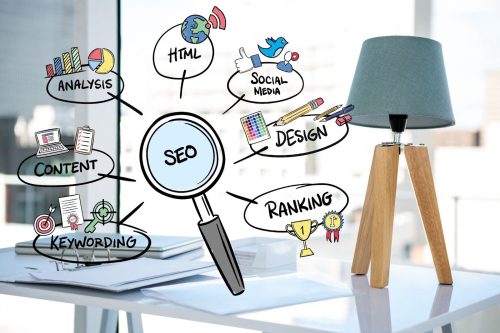
SEO is a complicated process that requires a lot of work. These are a number of tasks you need to perform when trying to improve SEO for your website. They are classified into 2 tiers:
On-page SEO
On-page SEO is a series of practices that you make adjustments on an individual page and the website as a whole. It can be to optimise website structure, so as Google can read through and users can navigate your website easily. On-page SEO isn’t only about optimising content on body text, it also includes adding keywords into textual elements on the website. These elements are URL, title, meta description, alt of images, ect. They help users and search engines understand the content quickly.
Another consideration of on-page SEO is to optimise technical aspects on the website. They can be using structured data, reducing page load time, improving user interface, ect. Therefore, technical SEO requires you to have some understanding about web design and coding.
Off-page SEO
Off-page SEO is the activities that happen outside of the website, which is mostly known as backlink building.
Backlinks (or external links) are the links that point from other pages to your website. Backlink building is the practice of increasing the link popularity. When you have many quality backlinks, your website is seen as authority and trusted by search engines. Then, your website is more likely to be suggested to users.
We can see that SEO is a long-term strategy and requires a lot of activities to perform. Therefore, it is not easy. However, if doing SEO correctly and successfully, you can enjoy the values from it over a long period of time.
Why SEO Is Crucial for Business Growth
SEO directly influences how easily your target customers can find you online. It offers benefits like:
-
Consistent traffic: Ranking on page one of Google drives ongoing, free traffic.
-
Higher trust: Users naturally trust organic results over paid ads.
-
Long-term ROI: SEO builds a foundation that keeps paying off without continuous ad costs.
-
Better user experience: Optimizing your site improves usability and conversion rates.
What Is SEM and Why Do Businesses Use It?
Search Engine Marketing (SEM) uses paid ads, such as Google Ads, to gain immediate visibility on search engines. Unlike SEO, which takes months to build, SEM campaigns can start generating clicks and conversions as soon as they’re launched.
SEM is especially effective for businesses that want fast results, are promoting time-sensitive offers, or need to target very specific audiences. When people make a search, businesses have an option to buy ad space on search engines by joining an auction with others to bid for being shown. If you win this auction, your page is in the very first position and highly likely to be seen by this user.

Compared to SEO, SEM requires less work. The important thing here is you understand your customer’s intention so as to appear when they need you. That can be done by refining your keyword list and creating compelling ad copies and visuals. Furthermore, you can control your ads by setting the right budget and bidding strategy.
Purchasing ad listings is beneficial since it ensures you are in front of your potential customers and appear when people are looking for the products or services you offer. In addition, search engines are mostly used for searching information, and they contribute significantly to customer purchase behaviors.
The most popular search engine is Google, which is dominating the search engine market, with 83.3% of users on both desktop and mobile. Google allows businesses to advertise on Google platforms and other Google partners through Google Ads. They provide exceptional features for businesses, ranging from audience targeting to bidding and cost controlling.
Benefits of SEM
-
Instant results: Ads can appear at the top of search results within hours.
-
Targeted reach: Show your ads to specific demographics, locations, or interest groups.
-
Scalability: Easily adjust budgets and campaigns for seasonal promotions or events.
-
Data-driven: Track conversions and ROI with precise analytics.
SEO vs SEM: What’s the Difference?
In general, both SEO and SEM involve search engines and keywords, which make you appear in SERPs. However, there are significant differences between these two.
- SEO is free of charge. You don’t have to pay search engines for appearing on SERPs nor pay for being in a high position, but it might cost for SEO experts. Meanwhile, SEM costs you money for being in the first position on search results. You will get charged every time a user clicks on your ads.
- In SEO, results are shown to everyone who makes search queries on search engines, while in SEM, your ads can appear to selectively targeted audiences on search engines and other websites.
- SEO takes time to rank high in search engines; while in SEM, ads can appear in front of your audience as soon as you launch a campaign.
- SEO enhances your business’s online presence and success for the long term, while SEM can bring traffic to your site in the short term, until you stop your paid ad campaign.

Which One Should Your Business Choose?
SEO and SEM both carry pros and cons to be considered when deciding which one is better than the other. The right choice depends on your goals, budget, and timeline:
-
If you want long-term growth and authority, SEO is your best bet.
-
If you need immediate leads and sales, SEM will deliver faster results.
When to Focus on SEO
-
Your audience searches for information or guides related to your products/services.
-
You have the patience (3–6 months) to build visibility.
-
You want to reduce dependency on paid ads over time.
When to Focus on SEM
-
You’re launching a new product or time-sensitive campaign.
-
You have a dedicated ad budget and want quick wins.
-
You need precise audience targeting (e.g., retargeting past visitors).
How to Use SEO and SEM Together for Maximum Impact
Combining SEO and SEM creates a powerful funnel. While SEM captures high-intent leads quickly, SEO builds trust and credibility for the long run.
Here’s how to integrate both:
-
Run SEM campaigns to test high-performing keywords before investing in SEO content.
-
Dominate the search results by appearing in both ads (top) and organic results (below).
-
Use SEM data to refine your SEO strategy based on conversion rates and click data.
-
Maintain visibility—even if your organic ranking fluctuates, SEM ensures you stay visible.
Ready to Build a Smart SEO + SEM Strategy?
Choosing between SEO vs SEM doesn’t have to be complicated. If you want to dominate search results, a balanced approach is often best. Start with SEM for instant traffic, then use SEO to build authority and reduce costs in the long run.
Book a free consultation with our SEO and SEM team. We’ll create a tailored strategy to boost your traffic, generate leads, and turn visitors into loyal customers.