Marketing Trends for Small Businesses in Australia 2025
Running a small business in Australia has never been more dynamic. With competition intensifying and digital tools evolving, understanding small business marketing trends 2025 is crucial to staying ahead. As consumer expectations rise, agility and innovation are key to business survival.
According to recent industry forecasts, ad spending on social media in Australia is projected to reach US$4.73 billion in 2025, representing nearly 29% of total digital ad spend. This underscores how marketing trends for small businesses are shifting toward data-driven, digital-first strategies.
 The Evolution of Small Business Marketing
Before the digital age, small businesses relied on print ads, radio, and word-of-mouth. Fast forward to 2025, and marketing looks completely different. Businesses now prioritise social media, SEO, AI automation, and multi-channel campaigns.
A Sonar Group 2025 Benchmark Report found that over 70% of Australian marketers are already using generative AI tools—a clear indicator of how rapidly small business marketing trends 2025 are evolving.
Key Marketing Channels for Small Businesses in 2025
Social Media Marketing Trends for Small Businesses
Social media remains at the heart of small business marketing in 2025. Facebook, Instagram, and YouTube continue to dominate in Australia, while TikTok and LinkedIn are surging in relevance.
Key insights:
- AU$7.5 billion will be spent on social media ads in 2025.
- Short-form videos, influencer marketing, and social commerce are top priorities.
- Instagram Shops and TikTok Shop are becoming essential for e-commerce success.
Direct Mail in the Digital Age
Despite the dominance of digital, direct mail has not disappeared. Many Australian small businesses combine it with social media ads for stronger results.
Why it still works:
- Tangible and personal, with less competition than crowded inboxes.
- Complements digital strategies by reinforcing brand presence offline.
In small business marketing trends 2025, hybrid strategies—like combining mailers with digital follow-ups—are proving exceptionally effective.
SEO and Search Engine Marketing (SEM)
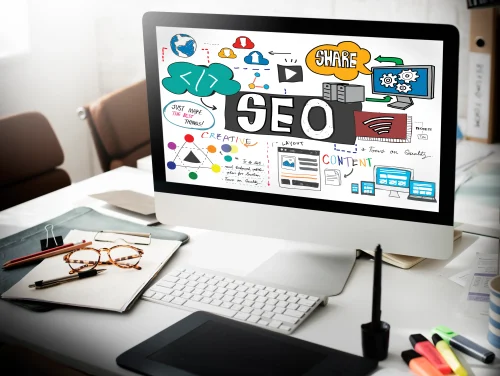
Appearing in search remains a top priority. Research shows that 46% of Google searches in Australia are local, and 78% of mobile local searches lead to an offline purchase within 24 hours (LocalDigital, 2025).
For small businesses, this means:
- Investing in local SEO (e.g., “plumber Sydney CBD” or “best coffee Melbourne”).
- Keeping websites updated and mobile-friendly.
- Using Google Ads for highly targeted campaigns.
Email and Content Marketing
Email continues to deliver one of the highest ROIs for small businesses. It’s affordable, measurable, and effective for building customer loyalty.
Meanwhile, content marketing has matured in 2025:
- 74% of Australian businesses now have a documented content marketing strategy.
- Blogs, podcasts, short-form videos, and infographics are the most popular formats.
- Consistent, valuable content builds trust and authority while supporting SEO.
Pairing content with email campaigns remains a cost-effective way to engage audiences.
Traditional Media for Local Impact

While digital dominates, traditional marketing—like radio, local newspapers, and outdoor advertising—still resonates with certain demographics.
In regional areas of Australia, small businesses continue to see value in community-focused campaigns that blend local media with online strategies.
 Credit: Forbes
Frequently Asked Questions
Social media ads, SEO, AI-driven marketing, automation, and multi-channel strategies.
Yes. 46% of Google searches in Australia are local, making SEO crucial for visibility.
Yes, especially in regional Australia where radio and local papers still resonate.
70% of marketers in Australia now use generative AI for campaigns and content.
Email marketing and SEO continue to offer the highest ROI for small businesses.