What Is PPC Advertising? A Simple Guide for Business Owners
If you’ve ever typed something into Google and seen “Ad” at the top of the page, you’ve already experienced PPC advertising.
But what are PPC ads, exactly? And why do businesses across Australia rely on them to get customers quickly?
This beginner-friendly guide explains PPC in simple terms — no jargon, no complexity — so business owners can easily understand how PPC works, why it matters, and when to use it.
What Is PPC (Pay-Per-Click) Advertising?
PPC advertising is a type of digital marketing where you only pay when someone clicks on your ad.
You’re not paying for visibility or impressions — you’re paying for real visitors who actively choose to see your offer.
In simple words: PPC means you pay only when someone shows interest.
This is why PPC marketing is so popular for small businesses, new businesses, and brands that want fast results.
PPC can help businesses:
- Show up instantly on Google
- Get leads or enquiries quickly
- Control their ad spend
- Target customers who are ready to buy
- Track every click and every dollar
How PPC Marketing Works
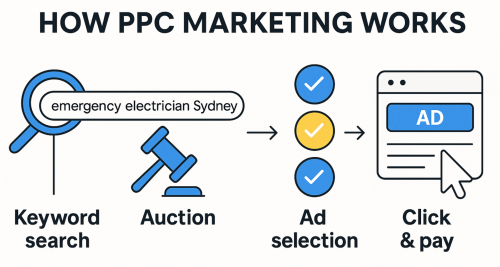 Here’s what happens behind the scenes:
- Someone searches for a keyword (e.g., “emergency electrician Sydney”).
- Google holds a quick auction — advertisers bid to show their ads.
- Google selects the winners based on:
- Relevance of the keyword
- Quality of the landing page
- Ad quality
- Bid amount
- Your ad appears at the top of the page.
- You pay only when someone clicks
You don’t need to understand complex algorithms.
If your keywords, ads, and landing pages are aligned → PPC works.
Thinking About Using PPC for Your Business?
Not sure if PPC is right for your industry, budget, or goals? Get clarity before you spend a dollar.

Why PPC Ads Matter for Business Owners
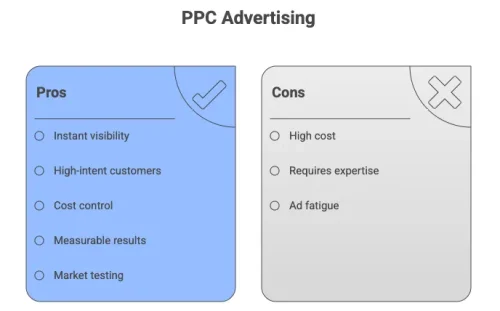
1. Instant visibility (unlike SEO)
SEO takes months. PPC takes minutes.
As soon as your campaign starts, your business can appear at the top of Google.
2. High-intent customers
People who click search ads are already looking for solutions — making PPC a strong lead-generation strategy.
3. Full control over cost
You set your daily or monthly budget.
You can pause, adjust, or stop at any time.
4. Measurable and predictable
Everything can be tracked: clicks, conversions, cost per lead, ROI.
You always know where your money goes.
5. Great for testing markets or new offers
Want to test a new service?
Run PPC for a week — see what people search for, what they click, what converts.
Types of PPC Ads Every Business Should Know
1. Search Ads (Google Ads)
Text-based ads shown at the top of Google’s search results.
Excellent for service providers, eCommerce, and local businesses.
2. Display Ads
Image/banner ads appearing on websites across the internet.
Useful for brand awareness and remarketing.
3. Social PPC (Facebook, Instagram, LinkedIn)
Paid ads where you target users by demographics, interests, job title, etc.
4. Remarketing/Retargeting Ads
Ads shown to people who visited your website but didn’t take action.
One of the highest-converting PPC tactics.
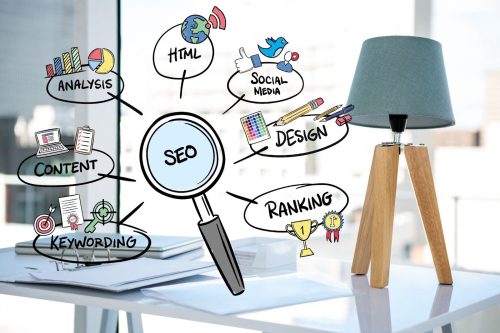
PPC vs SEO: Which One Should You Use?
| PPC Advertising | SEO |
| Instant visibility | Long-term growth |
| Pay for each click | Clicks are free |
| Great for urgent or competitive niches | Great for authority & trust |
| Budget-controlled | Content-driven |
Best strategy for most businesses: Use PPC + SEO together.
PPC brings immediate results while SEO builds long-lasting visibility.
Best Practices for Effective PPC Marketing
✓ Use the right keywords
Target keywords with strong intent (e.g., “buy,” “hire,” “near me,” “service”).
✓ Write clear, benefit-driven ads
Speak to the customer’s need instantly.
✓ Make your landing page match your ad
If your ad is about roof repairs, your landing page must also be about roof repairs — not general construction.
✓ Track conversions
Tracking tells you what’s working and what’s burning money.
✓ Test everything
A/B test headlines, descriptions, landing pages, and CTA buttons.
✓ Don’t set and forget
PPC needs regular optimisation — bidding, negative keywords, ad quality, and landing page UX.
Conclusion
If your goal is to:
- Bring in new leads
- Increase enquiries or bookings
- Get seen on Google immediately
- Test new services or markets
- Compete with established brands
then PPC advertising is one of the most effective strategies for your business. It’s measurable, fast, and designed to deliver results — not guesswork.
If you’d like guidance on whether PPC is right for your business, the team at Ptech can walk you through opportunities, costs, and realistic outcomes tailored to your industry.
Explore more guides and insights on digital marketing at Ptech
Frequently Asked Questions
PPC (Pay-Per-Click) means you pay only when someone clicks on your ad. Unlike traditional ads, you’re paying for real traffic from people who are actively interested in your product or service.
Costs depend on your industry, competition, and chosen keywords. You can start small and scale as you see results, making PPC flexible for any budget.
Yes. PPC helps small businesses get leads, enquiries, and sales quickly, even if your website is new or doesn’t rank on Google yet.
PPC can start driving traffic the same day your campaign goes live, giving you fast visibility and potential customers immediately.
PPC = fast results
SEO = long-term growth
Most businesses use both: PPC for instant leads, SEO for sustainable visibility.